Proactive Care That Reduces Demand and Keeps Patients Safer at Home
Standfirst
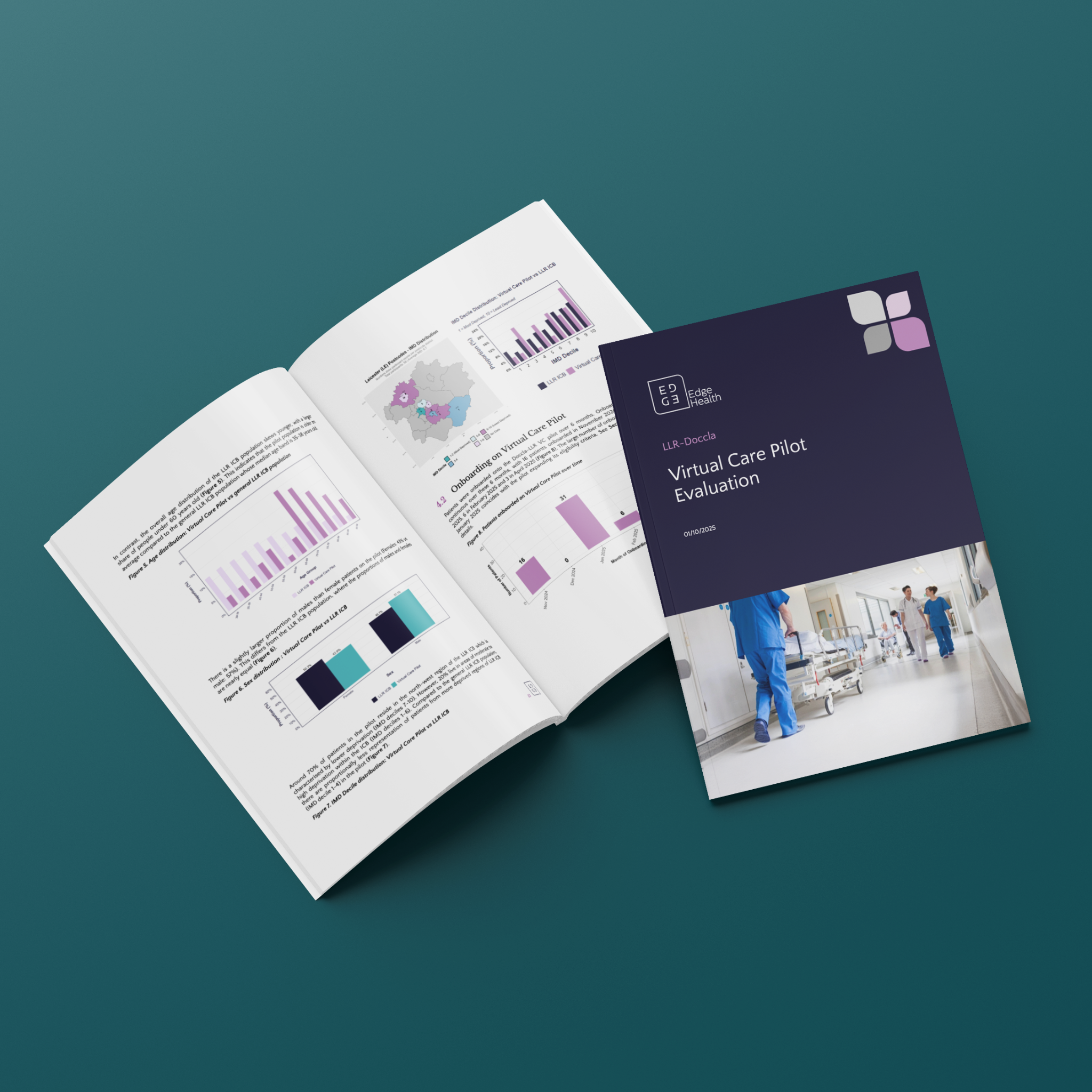
An independent evaluation of the Leicester, Leicestershire and Rutland Integrated Care Board (LLR ICB) and Doccla Virtual Care service reports large reductions across GP, ED, ambulance, admissions, and bed days, with strong patient experience. Doccla provides the clinical service, including alert review, virtual consultations, MDT participation, and prescribing.
At a glance
How the model works
LLR identified high risk patients (PNG groups 9-11) using a risk stratification tool and onboarded them to Doccla with remote vitals and soft signs questionnaires. Doccla clinicians monitored incoming data in real time, reviewed alerts, and spoke with patients to assess symptoms and agree on next steps.
Complex cases were taken to consultant-led MDTs. Where appropriate, Doccla clinicians prescribed or adjusted treatment and coordinated with the patient’s GP or community team. Clear thresholds guided escalation to primary care, urgent care, or 999. The focus is early intervention, steadying patients before issues become crises, and keeping people safer at home.
What the evaluation shows
For the pilot cohort, the independent evaluation estimates substantial reductions across primary and urgent care, admissions and bed days. The analysis compares expected outcomes without the service to observed outcomes with the service and quantifies the capacity released.
“As the clinical lead for this innovative pathway, I oversaw the development and delivery of this service which was tailored to patients with a number of different long-term conditions. By absorbing clinical needs that would otherwise fall to same-day and urgent care services, we significantly reduced the burden on primary and secondary care while at the same time, patients received more timely, tailored support, improving their ability to manage their symptoms for their long term conditions while they remained well in the community” Matt Parkes, Head of Clinical, Doccla
“This evaluation shows the tangible impact of proactive care done well - where Doccla’s clinical team monitors patients in real time, providing timely intervention and coordination with local NHS services. By identifying deterioration early and supporting people to stay stable at home, we’re reducing demand across primary and acute care while keeping patients safer and more confident in managing their health.” Dr Greg Edwards, Chief Medical Officer, Doccla
Value at scale
The pilot recruited fewer patients than planned, largely due to capacity pressures on GP surgeries. This affected early financial returns. Scenario modelling shows a different picture at realistic operating levels. Breakeven occurs at about 95 patients. At the planned capacity of 185 patients, the cost benefit ratio is 1.96 for every £1 invested. With Doccla directly supporting enrolment and recruitment, this barrier would be significantly reduced, enabling systems to operate at planned capacity and realise full value.
Patient voice
People reported quick access to clinical support and reassurance from being monitored at home. Most rated their experience positively (95% rating the service as ‘Good’ or ‘Very Good’), found the equipment and app easy to use, and described feeling safer.
People told us the service felt responsive and supportive at home.
- Easy setup and simple kit, with help on hand when needed.
- Fast contact from a clinician when readings changed.
- Clear guidance that reduced anxiety between appointments.
- A stronger sense of safety and control over day to day health.
“It’s so nice to know that you’ve got the support staff waiting there. The response is immediate - it just makes you feel safe at home.” - Chris, Doccla patient
Who benefits
People with multimorbidity or frailty who are at risk of admission. Ideal for those with COPD, heart failure, diabetes, or frequent ED use.
Primary care teams that want to release capacity while improving safety. Fewer avoidable appointments, clearer escalation, and actionable data from home monitoring.
Community and hospital teams seeking smoother step up and step down pathways. Earlier intervention, fewer conveyances, and better handovers.
ICBs and system leaders aiming to reduce avoidable demand and deliver cost benefit at planned utilisation. Clear outcome reporting across GP, ED, ambulance, admissions, and bed days.
Carers and families who value reassurance, clear contact routes, and fewer last minute crises at home.
Get the full evaluation
Download the independent report for methodology, utilisation analysis, sensitivity testing, and ROI scenarios.

.png)


